
About Project Identify
Our Story
There are over 2,000 Medical Examiner and Coroner Offices across the US which are responsible for establishing the positive identification of decedents that fall under their jurisdictions. Despite diligent efforts, there are challenging cases that remain unidentified each year. Currently there are over 15,000 cases of unidentified bodies entered into the National Missing and Unidentified Persons System (NamUs.gov). These are the cold cases, the nameless, the forgotten. For cases involving skeletal remains, Project Identify's mission is to go across the US and use advanced 3-D scanning technology to create exact replicas of skulls which can then be used to create state-of-the art facial approximations. It is the hope of Project Identify to assist with these difficult cases and give these victims their identity back.

About us
Project Identify is organized exclusively for charitable and educational purposes and assists governmental agencies in the identification of unidentified human remains through forensic imaging, facial approximation, education, and public outreach.
Project Identify is proud to announce that we are now an official IRS-recognized 501(c)(3) public charity dedicated to restoring identities and bringing answers to families through forensic science, education, and collaboration.
How Project Identify works
Agency Partnership
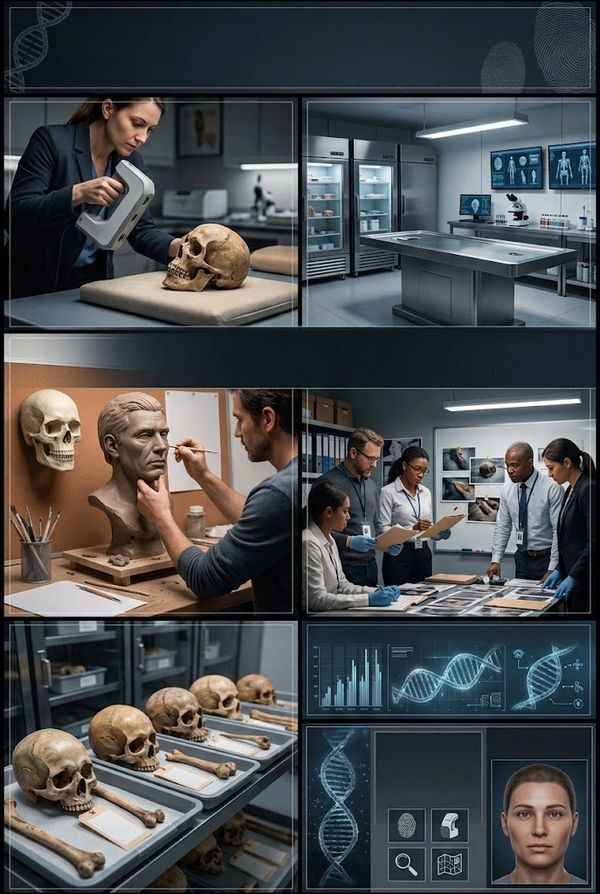
We work directly with medical examiner and coroner offices to identify unidentified human remains that may benefit from 3D documentation and forensic facial approximation. Together, we determine which cases are appropriate for participation.

Photography & Scanning
Project Identify travels to the agency to carefully photograph and perform high-resolution 3D scans of each unidentified skull. These scans create a permanent digital record that preserves valuable forensic information while reducing the need to repeatedly handle fragile remains.
Forensic Facial Approximation
Each digital skull is transformed into a forensic facial approximation by experienced forensic artists. Approximations are completed either through Project Identify's professional forensic artists or through my forensic facial approximation courses at the New York Academy of Art and Ringling College of Art and Design. Every artist has been personally trained and selected based on their demonstrated ability to produce accurate, high-quality forensic work. Project Identify compensates artists for each completed facial approximation.
Return to the Investigating Agency
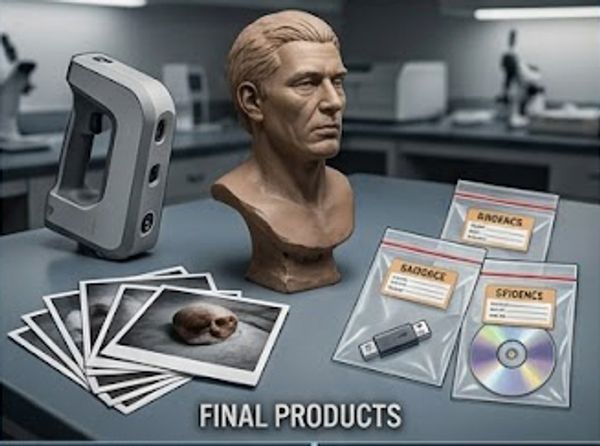
Once completed, all photographs, 3D scan files, and finished facial approximation images are returned to the medical examiner or coroner's office. The investigating agency retains control of the case and determines how the images will be used as part of the ongoing investigation.
Public Awareness
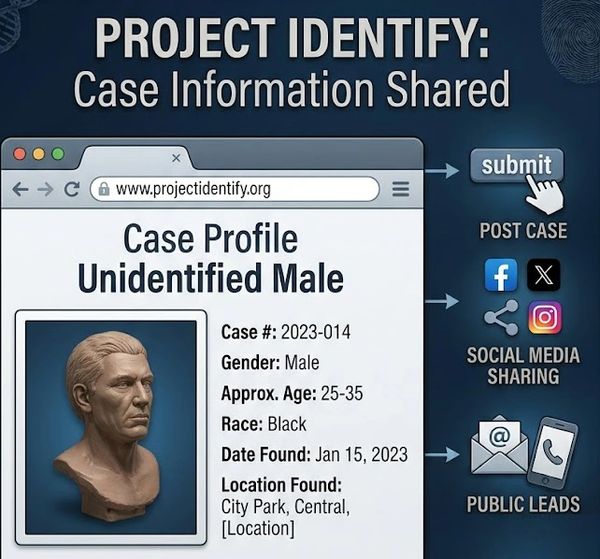
With the approval of the investigating agency, completed facial approximations and publicly available case information may also be featured on the Project Identify website to increase public awareness and generate new investigative leads. Sometimes all it takes is one person recognizing a face to solve a case.
Restoring Identities
Our goal is simple: create new opportunities for identification. Every facial approximation represents another chance to restore someone's identity and provide long-awaited answers to their family.

Why Project Identify Exists
Since 2015, I have worked with medical examiners and universities to create forensic facial approximations for active unidentified human remains cases. During that time, one reality became clear: thousands of unidentified skulls remain in medical examiner and coroner offices across the United States without ever being digitally preserved or receiving a forensic facial approximation.
As years pass, opportunities to generate new investigative leads often become more limited—not because these individuals are any less important, but because agencies must balance limited resources with the demands of new investigations.
Project Identify was created to change that.
By combining advanced 3D scanning, forensic art, higher education, and collaboration with medical examiners, coroners, forensic anthropologists, and law enforcement, we are building a nationwide effort to preserve these cases digitally, create scientifically informed facial approximations, and provide investigators with new opportunities to identify the unknown.
These are not forgotten cases.
These are people.
Every person deserves their name back.
Hope Begins With Identity.
Meet the Founder
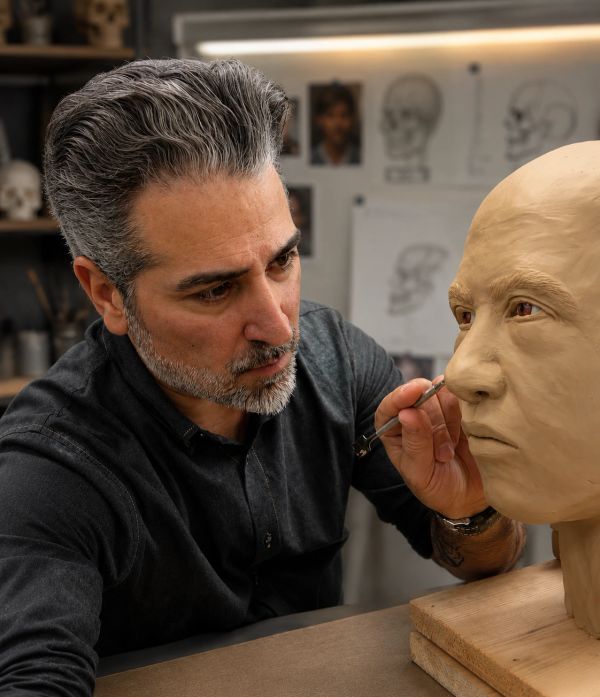
Joe Mullins is a forensic artist and with nearly three decades of experience assisting law enforcement in the identification of unidentified human remains.
Throughout his career, Joe has created forensic facial approximations, age progressions, and forensic artwork in support of investigations and has trained forensic professionals both nationally and internationally.
He teaches forensic facial approximation at the New York Academy of Art, Ringling College of Art and Design, and George Mason University, where students work on active unidentified human remains cases in collaboration with medical examiners and law enforcement agencies.
In addition to his university instruction, Joe has provided specialized forensic art training for law enforcement professionals in Germany and will be teaching an upcoming international training program in Luxembourg, sharing forensic facial approximation techniques with investigators from around the world.
Project Identify grew from a simple realization. Since 2015, while teaching these courses and working with medical examiners and coroners, Joe saw that thousands of unidentified individuals had never received a forensic facial approximation or permanent digital 3D record. Rather than waiting for opportunities to come through individual classes, he envisioned an organization dedicated solely to preserving these cases and creating new investigative leads.
That vision became Project Identify.
By combining advanced 3D scanning, forensic art, education, and collaboration with medical examiners, coroners, forensic anthropologists, and law enforcement, Project Identify is working to restore identities and bring answers to families.
Hope begins with identity

Join Us
Help Our Cause
Your support and contributions will enable us to meet our goals and fund our mission.